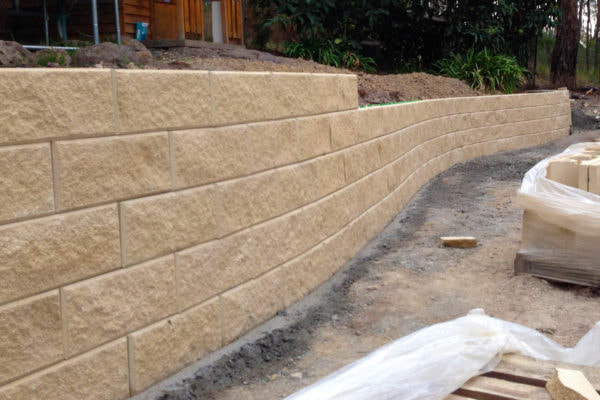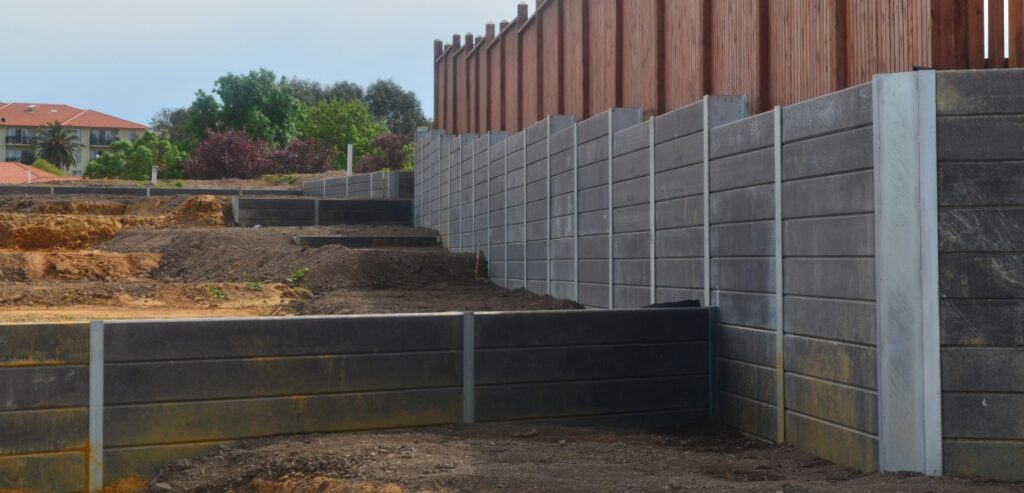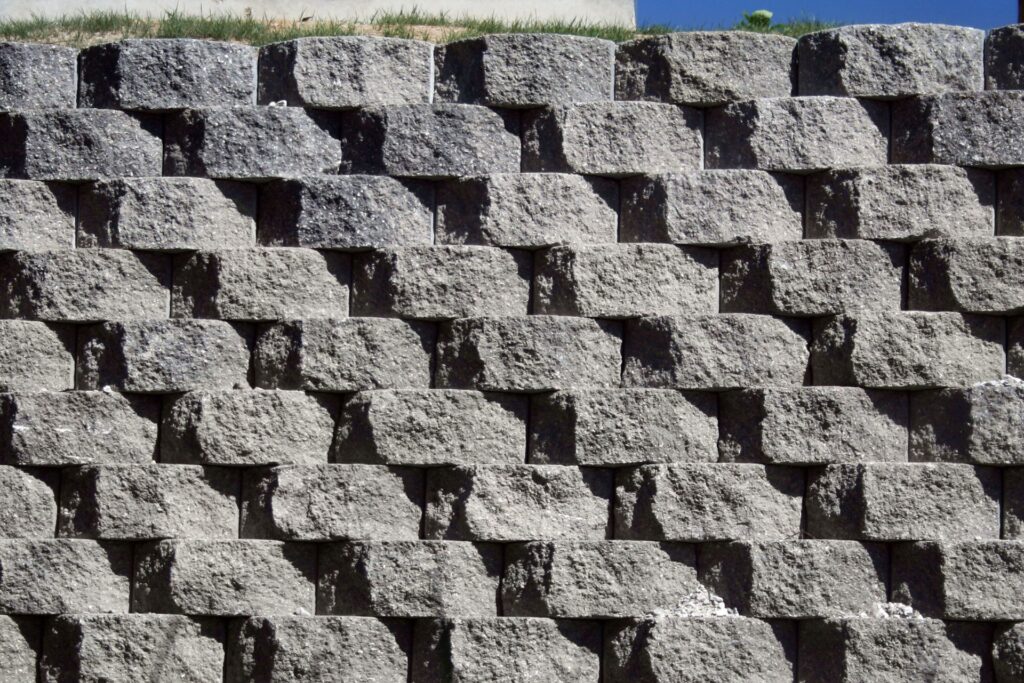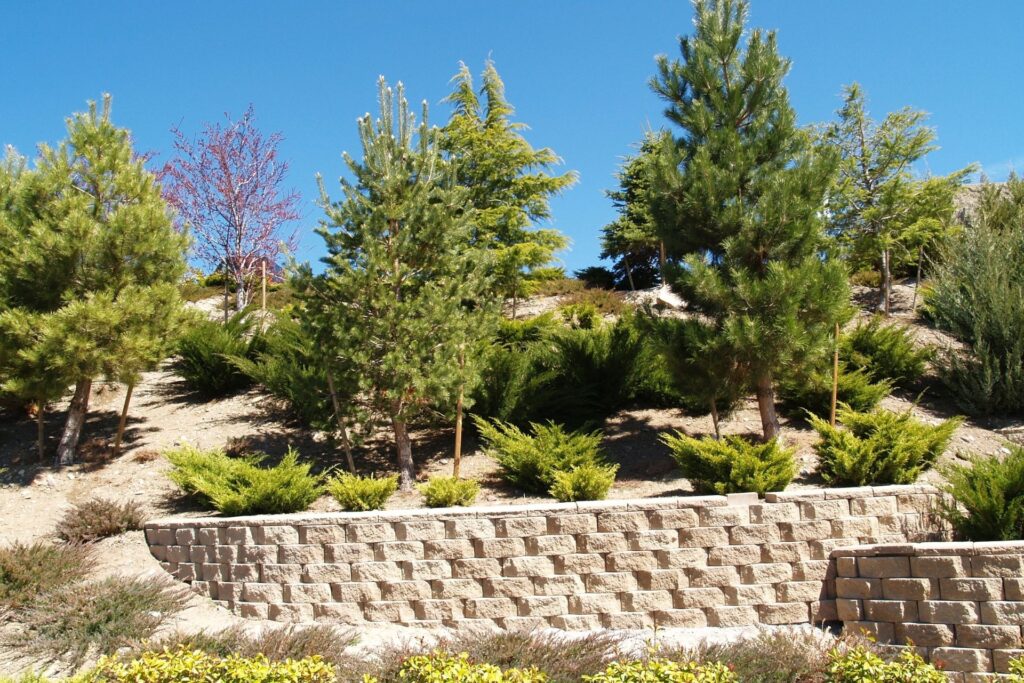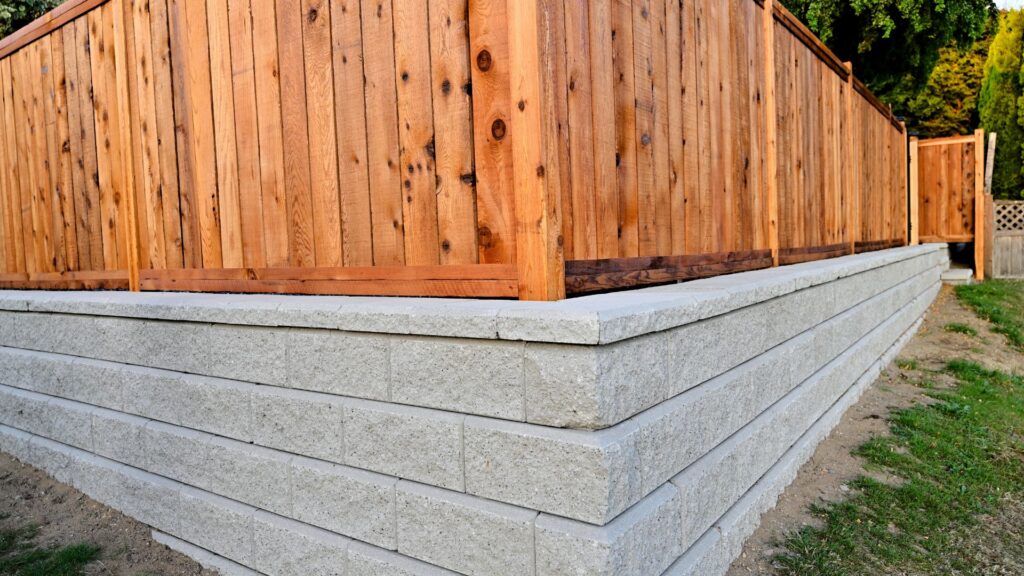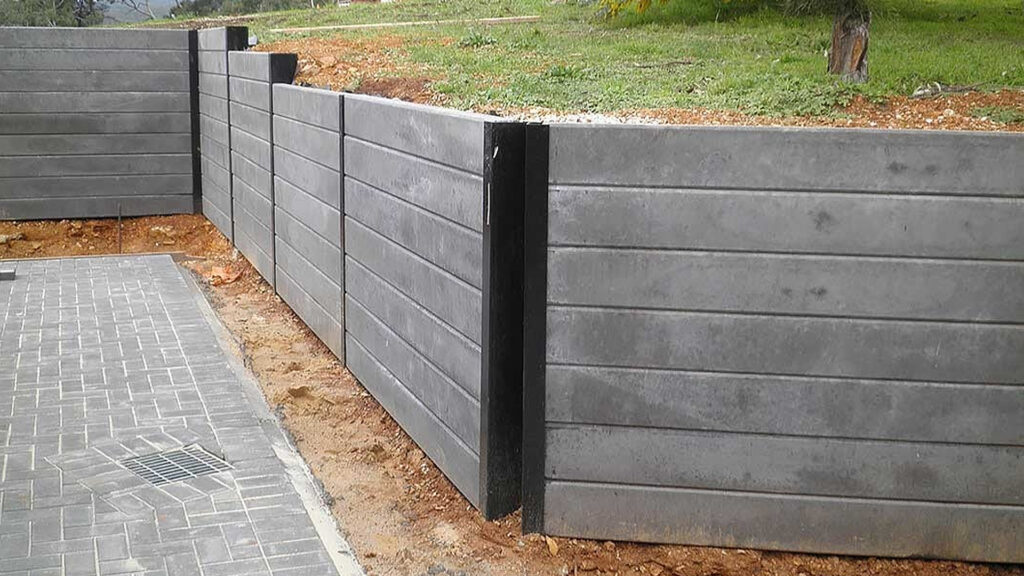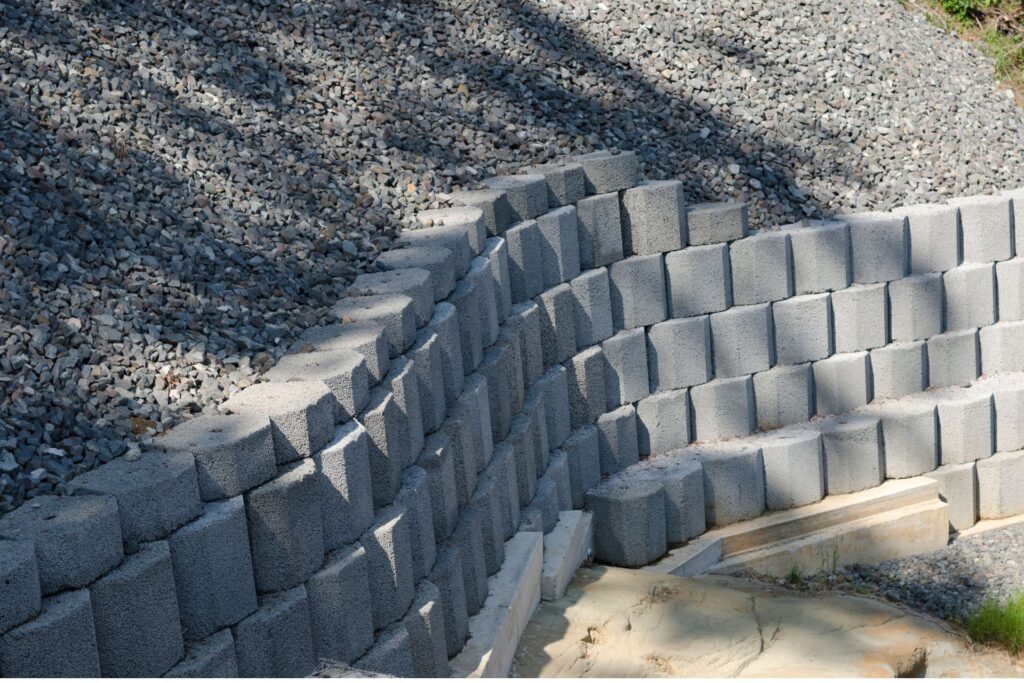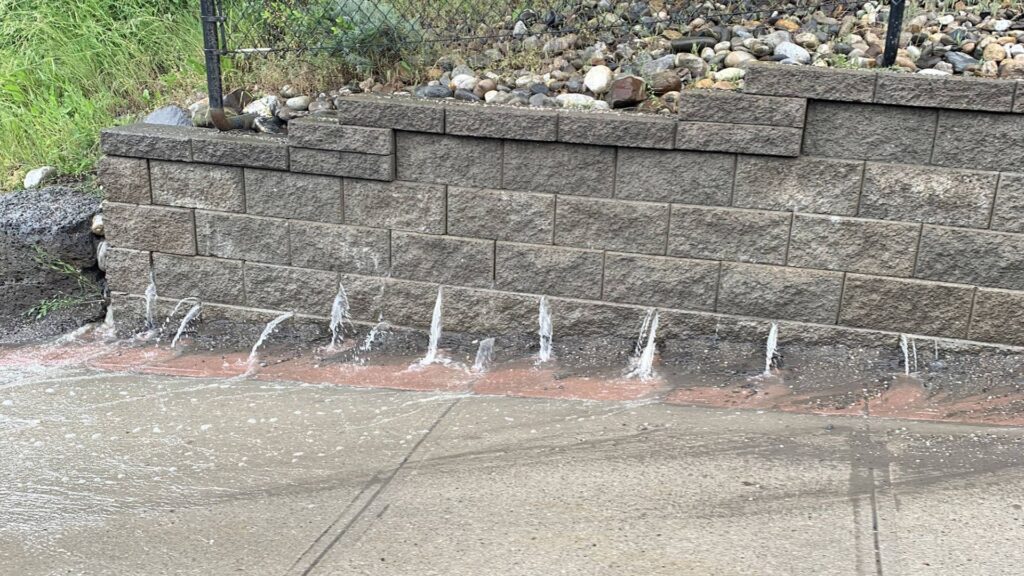
Welcome to our comprehensive guide on building retaining walls in Auckland! Whether you’re a homeowner, landscaper, or builder, this resource will help you understand the crucial regulations, consent requirements, and best practices for constructing retaining walls near property boundaries. We aim to provide clear, practical information to ensure your retaining wall project complies with local building codes, meets safety standards, and enhances your outdoor space beautifully and safely. Let’s get started on making your retaining wall project a success!
Building a retaining wall near your property boundary in Auckland is one of the most common landscaping projects homeowners tackle. But it also raises plenty of questions about consent, compliance, and how to avoid disputes with the neighbours. This guide walks you through the rules, when you need consent, and how to get your project right the first time.
Table of Contents
Key Takeaways
- In Auckland, you can often build a small retaining wall right on or very close to the boundary, but only if it’s under about 1.5 metres high, not supporting additional loads like driveways or buildings, and complies with the Building Code.
- Once a wall exceeds 1.5 metres in height, carries vehicles, structures, or slopes above it, or affects neighbouring land, you will almost always require a building consent and engineering sign-off from a Chartered Professional Engineer.
- Proximity to the boundary is also controlled by planning rules under the Auckland Unitary Plan, including height-in-relation-to-boundary controls, yard setbacks, and special overlays for flooding or land instability.
- Always talk to Auckland Council before building and get a survey or confirm boundary pegs so your wall isn’t accidentally constructed on the wrong side of the line.
- A safety barrier is required where there’s a fall of 1 metre or more, and disputes with neighbours are common if drainage or structural integrity issues affect their property.
How Close To The Boundary Can I Build A Retaining Wall In Auckland?
Auckland Council does not set a single “X metres from the boundary” rule for retaining walls. Instead, the regulations control wall height, the loads it supports, and how the structure affects visual bulk and neighbouring properties near boundaries.
For low walls up to about 1.5 metres high with no surcharge (meaning no driveway, building, vehicles, or steep slope above), you can usually build on or very near the boundary line. However, you must stay entirely on your own land and comply with the Building Code. Any part of the wall, including drainage metal and sub-soil drains, cannot cross onto your neighbour’s property at any point.
Building right on the boundary can trigger additional rules under the Auckland Unitary Plan. Even if your wall doesn’t require building consent, you may need resource consent if it breaches height-in-relation-to-boundary controls or exceeds combined height limits with a fence above. These planning rules exist separately from building consent requirements.
In practice, many homeowners allow a small offset of 150 to 300mm inside their boundary. This keeps posts, drainage, and footing work comfortably within their own land and avoids any accidental encroachment that could create legal headaches down the track.
A licensed surveyor or clear, existing boundary pegs are the safest way to confirm exactly where the legal boundary sits before construction begins. Old fences often don’t match title plans, and assumptions can lead to costly mistakes.
Retaining Wall Height, Loads, And When Consent Is Required
When it comes to Auckland Council’s requirements, wall height and loads matter far more than the exact distance to the boundary. Understanding these factors will determine whether your retaining wall project needs formal approval.
The 1.5 Metre Threshold
The common New Zealand rule is straightforward: retaining walls over 1.5 metres high, or any wall carrying an additional load (vehicles, driveways, buildings, or steep cut slopes), generally require building consent. This applies regardless of how far the wall sits from your boundary.
Under Schedule 1 of the Building Act 2004, a wall retaining up to 1.5 metres depth of ground with no surcharge may be exempt from building consent. However, even exempt walls must fully comply with Building Code clause B1.3.1 for structure and stability. Being exempt doesn’t mean you can build however you like.
When Engineering Is Required
For walls over 1.5 metres or up to 3 metres with surcharge, structural design or review by a Chartered Professional Engineer is essential. Auckland Council’s Building Consent Practice Note AC2231 emphasises that surcharge determination is the designer’s responsibility, factoring in site conditions, construction phases, and foreseeable future uses.
Practical Examples
| Scenario | Height | Surcharge | Consent Required? |
|---|---|---|---|
| Timber wall along garden boundary on stable ground, no driveway above | 1.0m | None | Often exempt |
| Wall on boundary holding up concrete driveway or car parking | 1.2m | Vehicle loading | Usually required |
| Wall between two urban Auckland sites | 2.0m | Variable | Almost always required, plus engineering |
| Garden wall below neighbour’s lawn with no structures | 1.4m | None | Likely exempt if no other factors |
The key question isn’t just “how tall is the wall” but “what’s happening above and around it.” A 1.2 metre wall under a neighbour’s driveway needs consent due to the surcharge, even though the height alone might be exempt.
Boundary, Neighbours, And Legal Responsibilities
Walls close to boundaries are sensitive because they can affect your neighbour’s land, fences, privacy, sunlight, and drainage. Getting this wrong can result in civil disputes, repair bills, and damaged relationships.
Who Supports What?
Each owner is normally responsible for retaining the land they cut or excavate. If you dig into your site near the boundary, you typically must support your own ground without undermining the neighbour’s land or structures. The zone of influence, which extends behind the wall a distance equal to the retained height, explains why boundary proximity matters so much. Soil pressures extend laterally and can destabilise adjacent land if the wall isn’t properly designed.
If your retaining wall fails and causes damage to the neighbour’s property, whether through fence collapse, slipped soil, or flooding, you may be liable for repair costs and face civil claims.
Before You Build
- Check titles, easements, and any existing fencing or encroachment agreements
- Get written agreement with the neighbour if sharing a wall or placing one directly under a common fence
- Avoid trespassing: construction access onto the neighbour’s land requires their permission
- Document the existing condition of boundary fences and neighbour’s land with photos
Retaining Walls vs Fences
The Fencing Act treats fences and retaining walls differently. A retaining wall is generally not automatically a shared cost like a boundary fence unless you and your neighbour agree in writing. If your wall supports your land, it’s your responsibility and your cost.
Auckland Council Rules: Building Consent Vs Resource Consent Near Boundaries
Auckland operates two separate permission systems, and understanding both is crucial for walls near boundaries.
Building Consent
Building consent focuses on structural safety. Auckland Council typically requires building consent for retaining walls in these situations:
- Over 1.5 metres in height, measured from the lower ground level
- Any height if supporting additional loads like buildings, driveways, or steep cut slopes
- Walls near public land, drains, or waterways often requiring further assessment
- Walls proposed within 1 metre of a boundary, which trigger a mandatory pre-construction site meeting with a council inspector
For walls within 1 metre of the boundary, Auckland Council requires a “boundary cut” inspection before excavation begins. This verifies that methodology strategies are in place to safeguard the neighbouring property. It’s a non-negotiable step for any building consent application involving such proximity.
Resource Consent
Resource consent addresses planning, visual, and environmental effects under the Auckland Unitary Plan. You may need resource consent when:
- The wall exceeds permitted height at the boundary in the relevant zone (for example, over 2 metres combined with a fence)
- The wall breaches height-in-relation-to-boundary controls and impacts neighbour’s light or outlook
- The site is in a flooding, coastal erosion, or land instability overlay
- Earthworks exceed thresholds, such as cutting or filling over 80m²
Example Scenario
Consider a 1.2 metre retaining wall with a 1.8 metre fence above, near the boundary in a residential zone. Together, they create a 3 metre high structure. Even if the retaining wall alone doesn’t require building consent, the combined height may breach resource consent thresholds under local regulations.
Auckland Council’s online consent checkers are useful starting points, but for tight urban sites in suburbs like Mount Eden, Grey Lynn, or Takapuna, contacting the Council or a planner early is the smart approach.
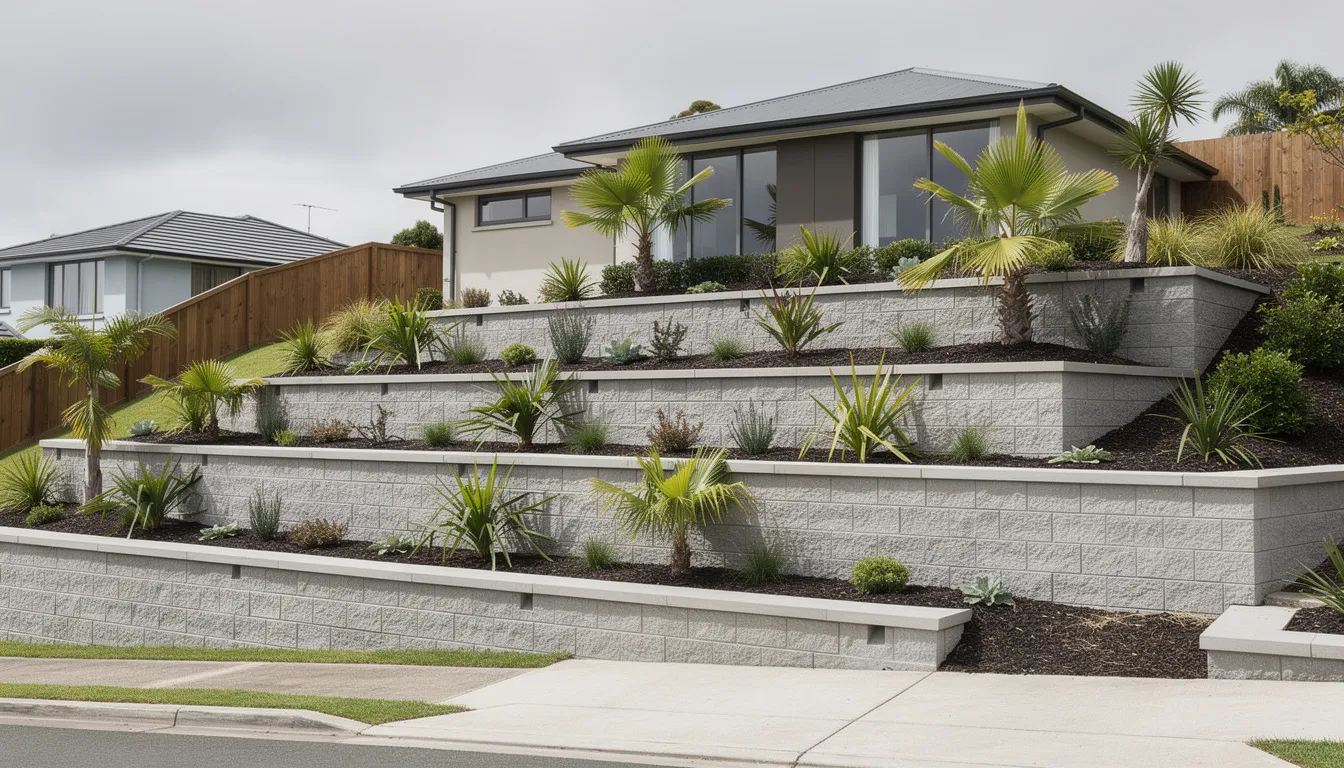
Design And Construction Considerations Close To The Boundary
Building near a boundary constrains your options for footing size, post spacing, and drainage layouts. Getting the design right from the start prevents problems that are expensive to fix later.
Structural Design Basics
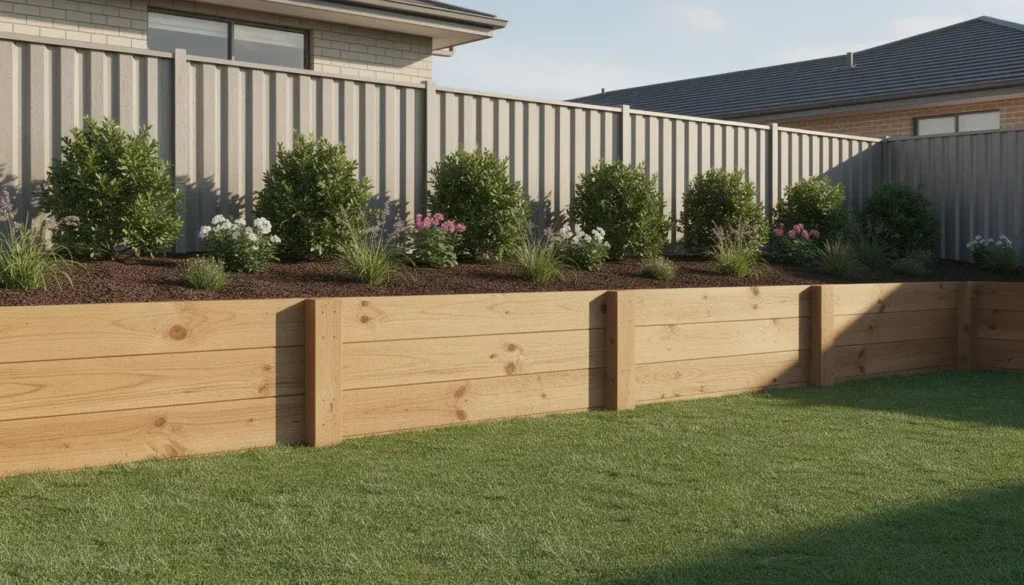
For timber retaining walls, post embedment depth is critical. Posts should be buried at least one-third of the total wall height. For example, a 1.2 metre wall typically needs 600 to 800mm of embedment below ground level.
Near boundaries, where access for future strengthening is limited, designers often specify:
- Closer post centres (for example, 1.2 metres instead of 1.8 metres)
- Larger posts for greater structural integrity
- Treated timber grades: H5 for posts in ground contact, H4 for rails and boards
For higher walls or those with surcharge, reinforced concrete or masonry construction becomes the preferred material.
Drainage Requirements
Proper drainage is the single most important factor in retaining wall longevity. Without it, hydrostatic pressure builds behind the wall and causes failure.
Essential drainage elements include:
| Component | Purpose |
|---|---|
| Free-draining backfill (scoria or aggregate) | Allows water to flow away from wall |
| Perforated drainpipe (agg pipe) | Collects and directs water |
| Geotextile fabric | Prevents fine soil clogging the drainage layer |
| Discharge to lawful outfall | Ensures water goes onto your property, not neighbour’s |
Auckland Council’s rules are clear: no sub-soil drains can cross boundaries. Your drainage must discharge onto your own property or to an approved stormwater connection.
Buildability Near Boundaries
Limited access affects construction methods:
- Machinery may not fit, requiring hand-digging
- Temporary shoring or staged excavation may be needed to avoid undercutting boundary fences
- Working space constraints affect staging and material storage
Where there’s a fall of 1 metre or more beside paths, decks, or outdoor living areas, safety barriers are required under safety regulations.
Typical Boundary Wall Components
A standard boundary retaining wall includes:
- Treated timber posts embedded in concrete
- Horizontal rails or boards facing the retained ground
- Free-draining backfill layer behind boards
- Perforated drainage pipe at base
- Geotextile separating backfill from native soil
- Fence above if required
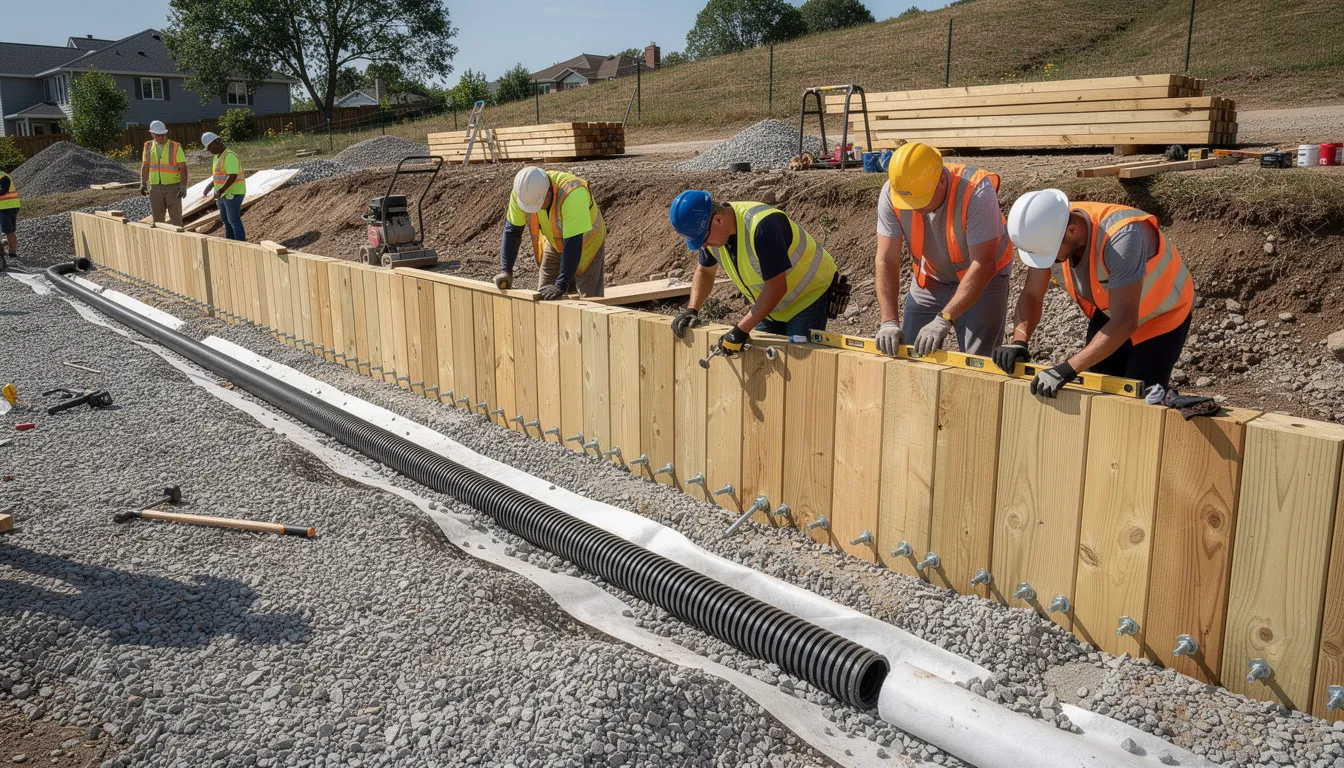
Working With Professionals On Auckland Retaining Walls
Auckland’s sloping sites, clay soils, volcanic pumice layers, and high rainfall make professional input especially valuable for walls near boundaries. The environmental impact of getting it wrong, through slips, drainage failures, or unstable soil conditions, affects more than just your property.
When To Engage Professionals
For walls near or on the boundary, consider engaging:
- A Chartered Professional Engineer for walls approaching or over 1.5 metres, or where land is unstable
- A licensed surveyor when boundaries are unclear or old fences don’t match title plans
- An experienced Auckland builder or landscaper familiar with council processes and local soil composition
What A Good Contractor Provides
A reputable retaining wall contractor in Auckland should offer:
- Site visit and discussion about boundary location, neighbour impacts, and access constraints
- Concept design showing the proposed retaining wall line relative to boundary and services
- Help with building consent drawings, calculations, and liaison with Council
- Producer statements (like PS4 for timber poles) including inspection documentation
When DIY Is Realistic
DIY can work for:
- Low risk, simple timber walls under about 1 metre on stable, well-drained ground
- Situations set well inside the boundary with plenty of workspace
- Sites with no nearby structures or shared drains
However, seek professional advice before attempting anything more complex. A non-compliant DIY wall that must be rebuilt to meet Auckland Council requirements, or to satisfy a future purchaser’s solicitor, can cost significantly more than doing it properly the first time.
The Cost Of Getting It Wrong
Building work that doesn’t comply with local building codes creates problems at sale time. Pre-purchase building reports flag unconsented or failing walls, and solicitors raise questions. The application process for retrospective consent is typically more expensive and time-consuming than getting it right upfront.
Frequently Asked Questions About Retaining Walls in Auckland
What are common materials used for retaining walls?
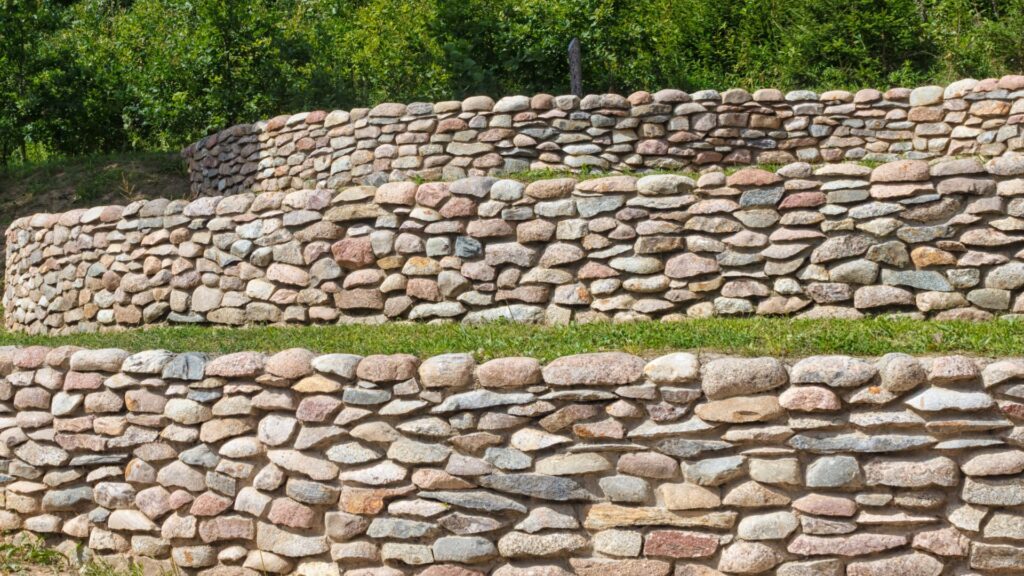
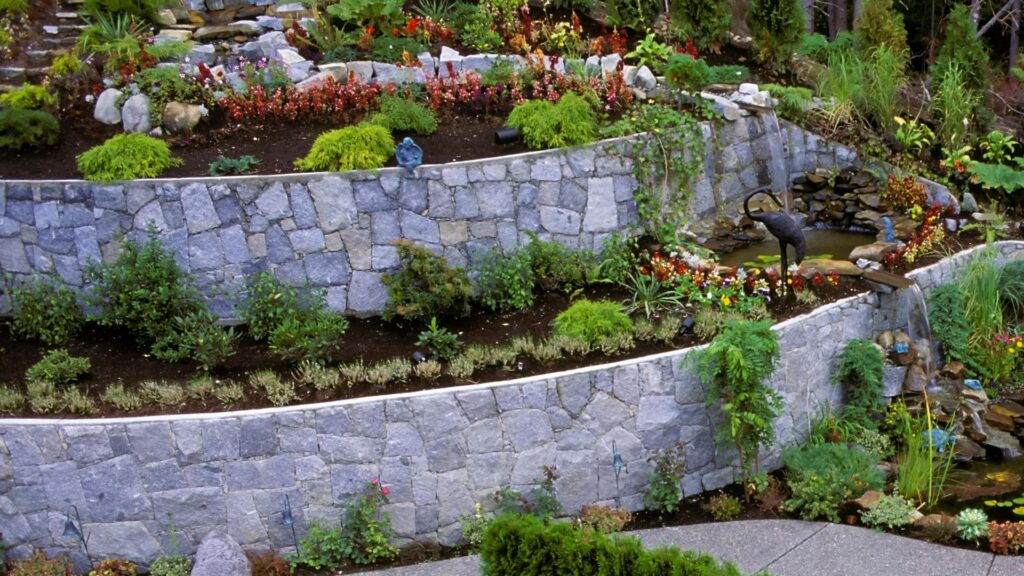
Retaining walls can be constructed from a variety of materials including concrete, stone, brick, and timber. Timber retaining walls are especially popular in Auckland due to their cost-effectiveness and local availability.
Why is treated pine commonly used for timber retaining walls?
Treated pine, particularly H4 or H5 grade, is resistant to rot and insects, making it suitable for in-ground use and ensuring durability in Auckland’s climate.
What types of retaining walls are there?
There are several types of retaining walls:
- Gravity walls, which rely on their own weight to hold back soil and are often made from heavy materials like stone or concrete.
- Cantilevered walls, which use the weight of the soil above to stabilize the soil below and are typically made from reinforced concrete.
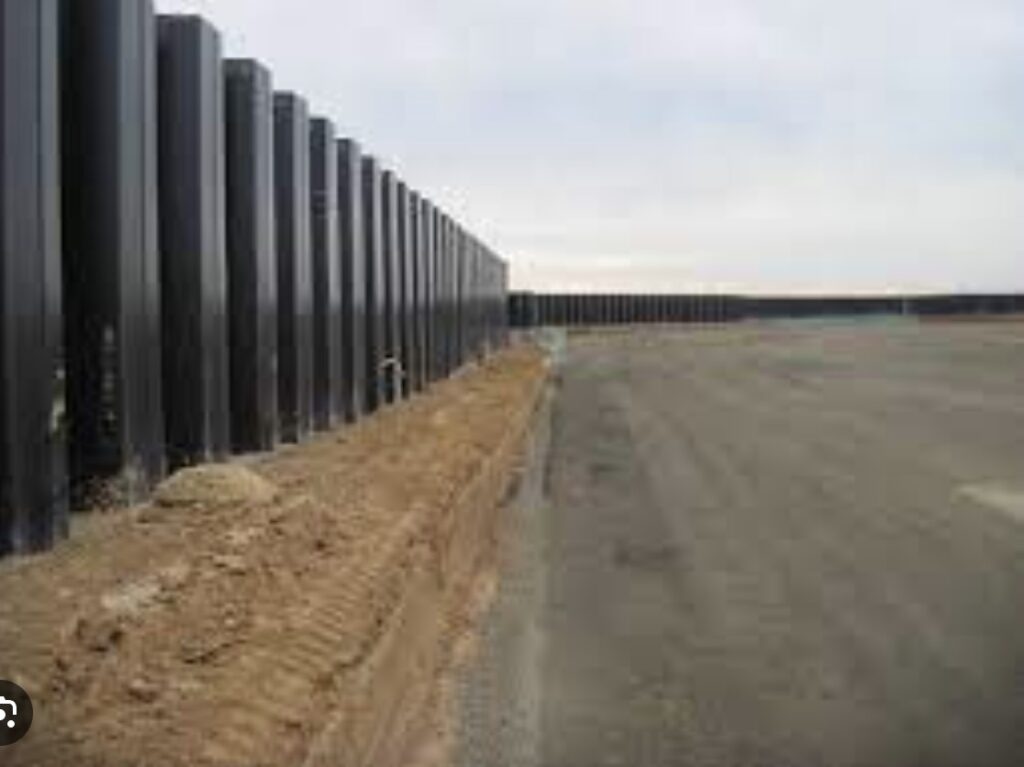
- Sheet pile walls, thin walls made from steel, wood, or vinyl driven into the ground, ideal for areas with limited space.
- Anchored walls, reinforced with anchors driven deep into the ground to provide additional support for walls needing to withstand high pressure.
Do I need building consent to build a retaining wall in Auckland?
Retaining walls under 1.5 meters in height generally do not require building consent if they do not support additional loads such as driveways or buildings. However, walls over 1.5 meters or those supporting additional loads usually require consent and engineering sign-off.
Are there different rules for retaining walls in rural zones?
Yes. In rural zones, retaining walls up to 3 meters high might not need consent if they are not near a boundary or building and are designed or reviewed by a Chartered Professional Engineer.
What are the consequences of building a retaining wall without consent?
Building without the required consent can lead to significant financial penalties, legal disputes, and may require dismantling or modifying the wall at your own expense. Ignoring the consent process can also cause costly delays and adjustments.
Can I build a retaining wall myself?
DIY retaining walls can be a rewarding way to enhance your outdoor space and save money, especially for smaller, simpler walls. However, for larger, complex walls or those on challenging terrain, hiring a professional is recommended to ensure safety and compliance with regulations.
Why is drainage important for retaining walls?
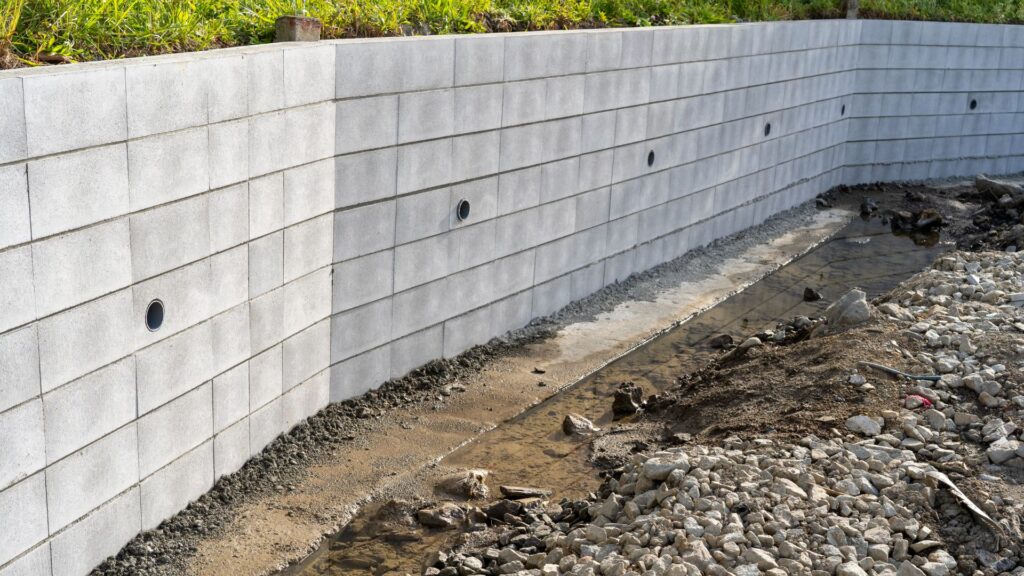
Proper drainage is critical to prevent hydrostatic pressure build-up behind the wall, which can cause structural failure. Many New Zealand regulations require drainage systems like perforated pipes with filter cloth and weep holes to manage water flow effectively.
What is involved in the building consent application process?
Applying for building consent typically involves submitting detailed plans and engineering reports to your local council, filling out application forms, and waiting for approval. Costs vary depending on project size and complexity, generally ranging from a few hundred to several thousand dollars.
How do local council rules differ for retaining walls?
Local council regulations can vary based on geography, population density, and urban versus rural settings. It’s important to check specific requirements with your local council to ensure your retaining wall project complies with all relevant rules and safety standards.
Can I put a retaining wall directly under an existing boundary fence?
You can often build a wall directly under or just inside the fence line on your own land. However, the wall and fence may be treated as a single combined structure for height and consent rules under the Auckland Unitary Plan.
Existing fence posts are rarely designed to cope with soil pressure from a retaining wall. If you’re adding a wall beneath a fence, plan to replace or upgrade the posts as part of the project. Getting the neighbour’s written agreement is wise if the fence will be removed, replaced, or supported off the new wall.
Do I need my neighbour’s permission to build a retaining wall near the boundary?
Formal neighbour consent isn’t required if the wall is fully on your land and your project complies with all council rules. However, talking to your neighbour in advance is strongly recommended. Share your plans, discuss timing, and agree on any access or temporary disturbance.
If any part of the wall or footing needs to sit on the neighbour’s land, you will need their agreement and often a written easement or encroachment agreement recorded on title.
How close can I excavate to the boundary before I need engineering?
There’s no single fixed distance, but deeper cuts near boundaries increase the risk of undermining fences and neighbouring foundations. Professional engineering input is advisable whenever cuts approach 1 metre deep within about 1 metre of a boundary, or where the neighbour’s ground is significantly higher.
Auckland Council may require geotechnical and structural reports for steep or complex walls near boundaries, even if the wall itself isn’t particularly tall.
What if my neighbour’s old retaining wall on the boundary is failing?
Responsibility usually lies with whoever’s land is being retained by the wall, but boundaries and historic builds can make this complex. The original construction may predate current building consent requirements, and ownership can be unclear.
Document damage with photos, write to your neighbour explaining concerns, and seek professional advice before starting any building work on a wall you don’t own. Council may become involved if the falling wall presents danger to people or property, but they don’t normally resolve private disputes over cost sharing.
Will a boundary retaining wall affect my property value in Auckland?
Well-designed, consented retaining walls can transform a steep site into usable space and outdoor space, adding significant value. Auckland’s hilly terrain means buyers often pay premium prices for sections with properly engineered retaining that creates flat, functional areas.
Conversely, unconsented or visibly failing walls reduce buyer confidence and get flagged in pre-purchase reports. Keep consent documentation, engineering producer statements, and construction photos as part of your property file to prevent erosion of value at sale time.
A beautiful space created by a well-built retaining wall becomes a selling point. A questionable one becomes a negotiation point, and not in your favour.
Conclusion
Building a retaining wall near your boundary in Auckland involves understanding a mix of building consent requirements, local regulations, and practical construction considerations. Walls under 1.5 metres that do not support additional loads can often be built close to or on the boundary without consent, but proper drainage, structural integrity, and compliance with the Building Code remain essential. For taller walls, those supporting driveways, buildings, or surcharge, or walls near boundaries requiring special inspections, professional design and building consent are mandatory.
Always check with Auckland Council early in your project to confirm specific rules for your site, especially regarding boundary setbacks, resource consent, and safety barriers. Engaging qualified professionals such as Chartered Professional Engineers and licensed surveyors will help ensure your retaining wall project meets safety standards, protects neighbouring properties, and creates a beautiful and functional outdoor space.
By following the correct procedures, respecting your neighbours’ rights, and prioritising safety and compliance, you can avoid costly mistakes and enjoy a durable retaining wall that enhances your property’s value and usability for years to come.